

The constructivist perspective on learning focuses on helping students express, criticize, and adjust their ideas. Although the effectiveness of constructivist learning environments in assisting students with these processes has been proven, teachers face various challenges in practical implementation. Mark Windschitl's research frames these challenges as dilemmas across four areas: conceptual, pedagogical, cultural, and political.
I. The Four Major Challenges in Practice
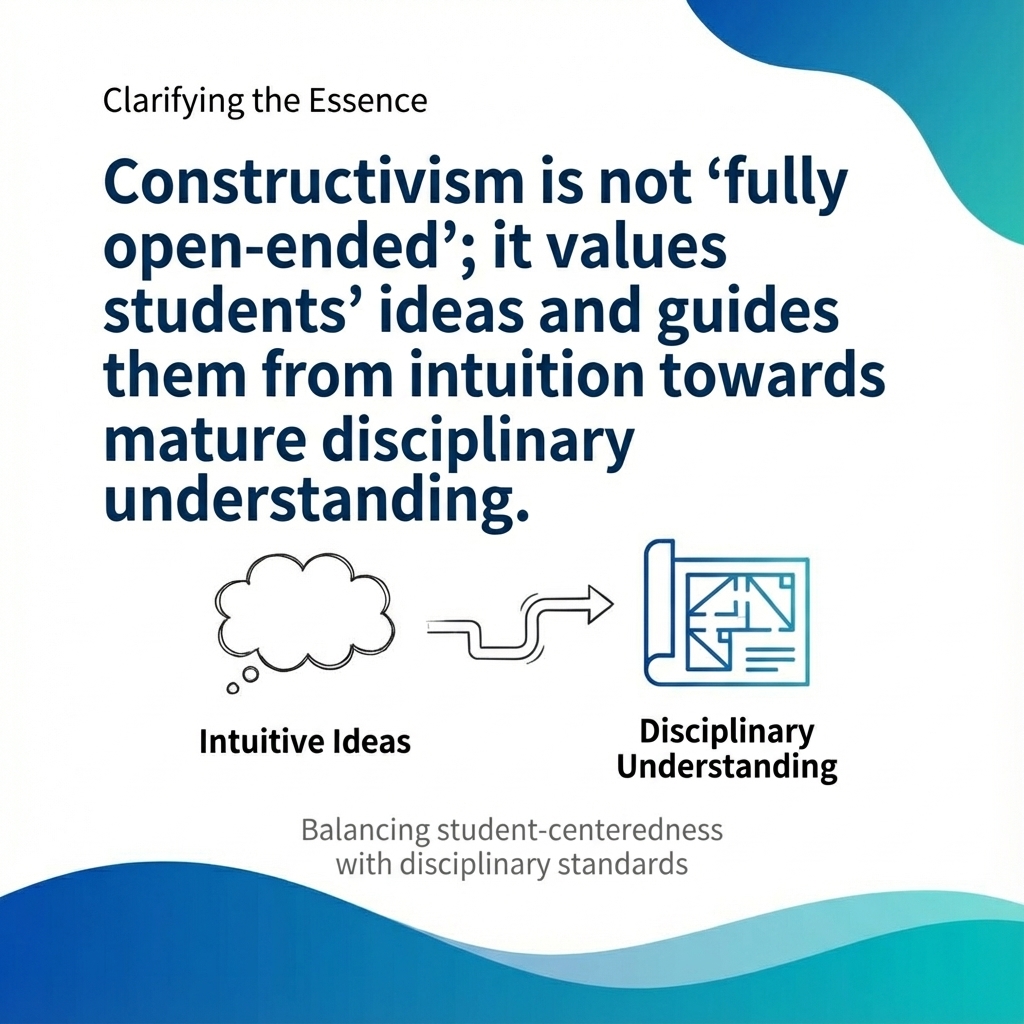
1.Conceptual Challenges : Many misunderstand constructivism as a completely open-ended classroom where the almost sole requirement is letting children pose their own questions and ideas. This view, referred to as "non-pedagogy," is absolutely not the essence of constructivism.
• Misconceptions of Constructivism: Constructivism is a perspective on learning, not a set of teaching methods or techniques. It focuses on ideas and interactions based on those ideas, rather than mere hands-on or discovery learning.
• Teaching Methods and Student Action: A misconception holds that "telling" or direct instruction has no place in a constructivist classroom. However, constructivists believe telling can serve as a way to guide students to think about their own ideas that they might not have considered yet. Furthermore, while students typically learn through social interaction or hands-on activities, sometimes their quiet reflection is also a sign of mental activeness.
• The Value of Ideas: Another misconception is that all student ideas, conjectures, and explanations possess equal legitimacy. Constructivism certainly values students' ideas, but it does not consider them to have equal value to the mature mathematical and scientific concepts developed over hundreds of years.
• Different Perspectives: Constructivism itself encompasses multiple perspectives, including focusing on individual ideas, concentrating on social interaction in the classroom, or emphasizing socio-cultural contexts (such as viewing students as apprentices in disciplinary cultural practices). Teachers need to integrate all these facets.
2. Pedagogical Challenges : When implementing constructivism, teachers must find a balance between the ideal and the reality.
• Fidelity to the Discipline: The dilemma teachers face is how to explore student ideas (such as their views on eclipses) while remaining faithful to the standard, normative concepts of the discipline. Teachers must value student ideas while helping them understand accepted disciplinary thoughts, rather than stopping at their "naive" ideas.
• Deep Content Knowledge: Implementing constructivist learning environments often requires teachers to have a deeper understanding of the subject matter. This is because teachers need to be able to think on your feet when students express ideas or generate unexpected confusions during activities.
• Managing Novel Interactions: Managing new forms of discourse and collaborative work in the classroom is another challenge. For instance, how to organize group work to ensure students are genuinely discussing ideas, rather than simply using a "divide and conquer" approach.
3. Cultural Challenges : Cultural challenges primarily stem from the traditional expectations students and parents hold regarding "good teaching".
• Traditional Expectations: Students and parents typically expect schooling to be like their past experiences, namely the "transmissionist" model, where the teacher tells students what to learn, students take notes, and they repeat it on tests.
• Conduit Metaphor: Student and parent views on teaching are strongly influenced by the "conduit metaphor".
• Cultural Differences: Students from different cultural backgrounds, especially those raised in directive education systems, may be more accustomed to teacher-led classrooms and may feel uncomfortable expressing their own ideas.
• Trust Issues: Teachers may also face questions regarding whether they can trust students to take responsibility for their own learning.
4. Political Challenges : Political dilemmas involve broader system and stakeholder pressures.
• Time Pressure: The biggest challenge teachers report hearing is that there is "no time" to teach in this manner. The suggestion is to invest more time in the deep conceptual development rather than spending a lot of time applying and verifying concepts.
• Accountability and Testing: Accountability systems, such as standardized tests and teacher evaluations, tend to prioritize training students to give the correct answer rather than promoting understanding. Teachers may need to organize with other teachers to strive to change the system.
• Stakeholder Support: Administrators, parents, and other stakeholders might not agree with the constructivist view of learning. If they believe a good classroom is one where students sit neatly and listen to the teacher, then a noisy group discussion classroom becomes a problem.
II. Resources and Strategies for Addressing Challenges
Faced with these complex challenges, teachers can utilize research, existing frameworks, and professional collaboration to enhance their capabilities.
1. Research Resources and Learning Progressions
• Academic Search: Teachers can utilize resources like Google Scholar or ERIC to search for research literature on topics such as examples of constructivist learning environments for specific subjects or establishing classroom culture.
• Standard Documents as Rationale: Standard documents, such as the Common Core State Standards (CCSS) and the Next Generation Science Standards (NGSS), can provide a strong political rationale for different teaching methods. CCSS emphasizes procedural fluency, conceptual understanding, and the application of mathematical ideas. NGSS emphasizes disciplinary core ideas, cross-cutting concepts, and science and engineering practices.
• Learning Progressions: These standards heavily rely on the stepping stones of learning progressions, where each model represents an intellectual achievement that explains a specific phenomenon and lays the groundwork for developing the next, more complex model.
2. "Ambitious Science Teaching" Framework
"Ambitious Science Teaching" provides a framework and website (ambitiousscienceteaching.org) designed to help teachers tackle these challenges.
• Core Practices: Ambitious teachers address student ideas over the long term, engage students in multiple rounds of creating and revising scientific models, and utilize various discourse strategies to encourage deep thinking.
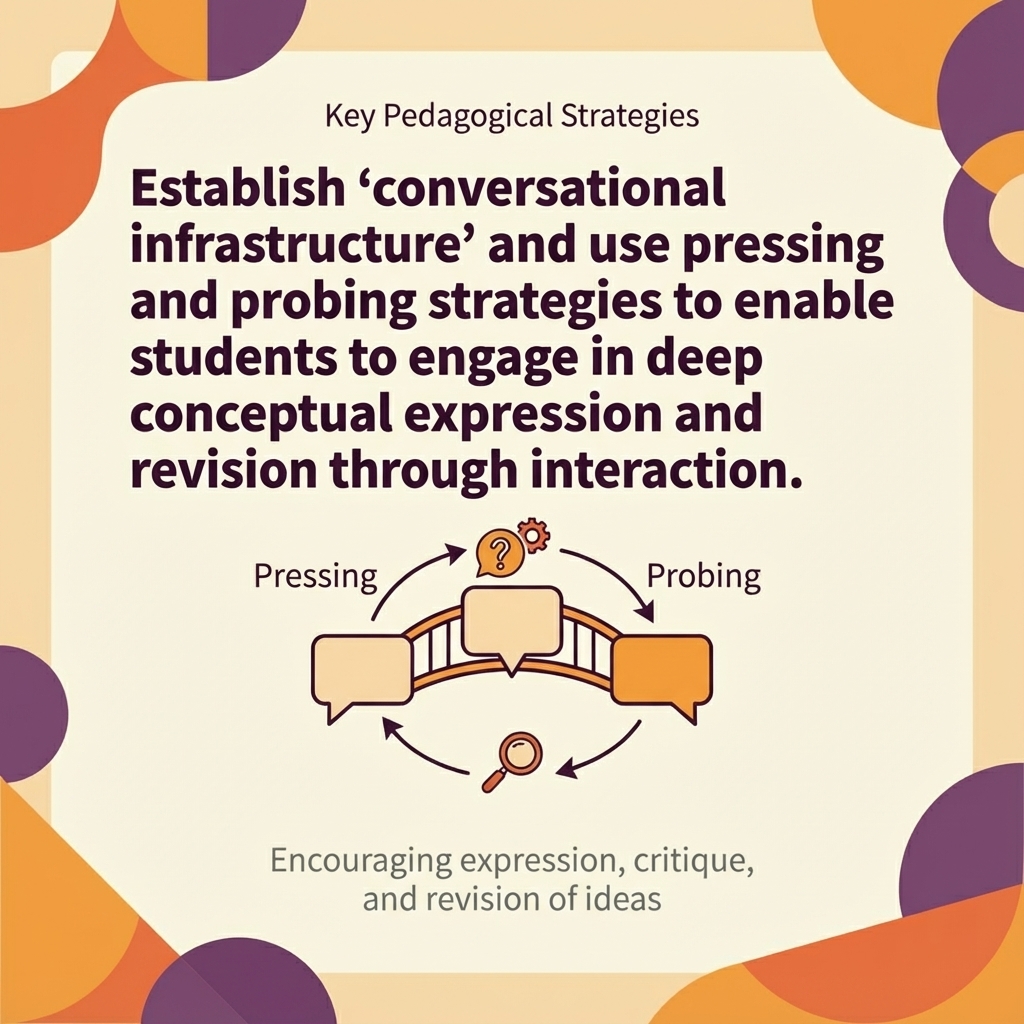
• Talk Typology: The website provides practical tools, such as the Talk Typology, which helps teachers establish a "conversational infrastructure". These conversational techniques include revoicing what a student has said, pressing the student for the evidence behind a statement, or probing for further explanation. These discourse skills should become second nature to any novice teacher.
• Resource Utilization: Constructivist classrooms encourage students to view textbooks or Google searches as resources during the sensemaking process, rather than merely as information transmission devices.
3. Professional Collaboration and Lesson Study
Professional collaboration enables the insights from these resources to "come alive". By interacting with peers, professionals can collectively solve problems; for example, when hundreds of teachers work together, they can find better ways to guide reluctant students into joining the conversation.
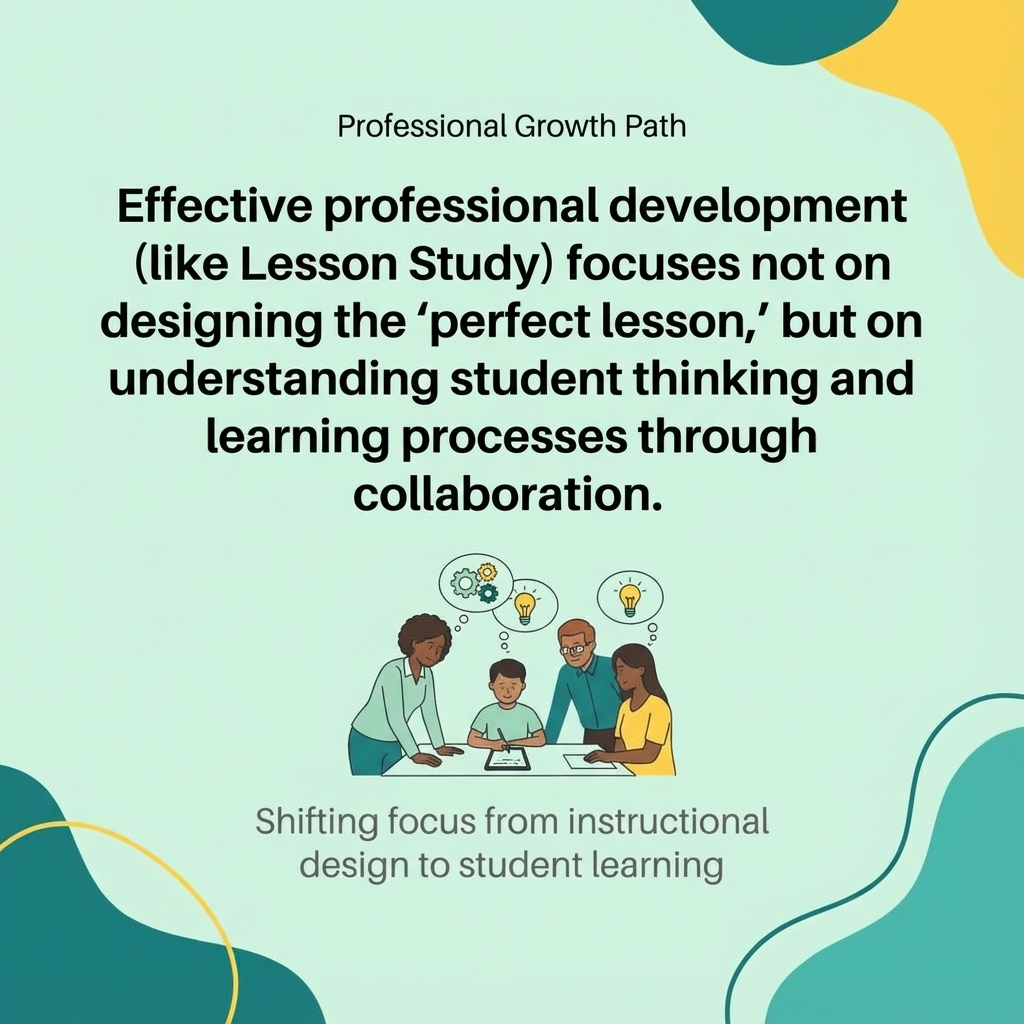
• Effective Professional Development: Effective professional development should deepen teachers' content knowledge and pedagogical methods; help teachers understand how students learn specific content; provide active, hands-on learning opportunities; and should be collaborative, collective, intensive, and sustained over time. In contrast, ineffective professional development often relies on the "one-shot workshop" model, focusing on technical training rather than understanding, and lacking sustained support.
• Lesson Study: Lesson Study is a major form of professional development in Japan and an effective structure for professional learning communities. It has proven to be highly effective in helping teachers understand innovations in practice.
◦ Three Phases: Lesson Study includes planning the research lesson (determining long-term goals, studying standards), implementing the research lesson (one member teaches, others observe and record student thinking), and reflecting on the research lesson (discussing data, often inviting outside experts to participate in the reflection).
◦ Core Benefits: The focus of successful Lesson Study is on teacher learning, rather than trying to design a "perfect lesson". The key lies in artful observation, particularly observing specific aspects of student thinking, and subsequent deep discussion. Research indicates that schools implementing Lesson Study show improvements in student test scores.
Conclusion
The process of implementing constructivist learning environments is full of challenges, but these dilemmas are real and worthy of serious consideration. By utilizing research resources, implementing frameworks such as "Ambitious Science Teaching," and engaging in robust professional collaboration like Lesson Study, teachers can continuously develop their capabilities, ultimately helping students effectively express, criticize, and modify their ideas in conceptually rich fields.