When children watch an iPad answer questions or play videos instantly, they usually think: "Wow! Computers are so smart, they know everything!"
But as guides in Computer Science, we have to tell children a shocking truth: "Actually, computers aren't smart at all. They are just incredibly fast."
A computer is like a giant with superpowers. It can perform millions of actions in a second, but it has a fatal flaw: it is extremely "Literal-Minded" and has absolutely zero concept of "Common Sense."
In this unit, we won't just be playing games; we will learn how to communicate with this "Literal-Minded Giant." We will guide children to switch from "Human Language" to "Computer Logic," experiencing what it means to give precise instructions.
1. What is "Literal-Mindedness"? (Literal Interpretation)
If I say to you, "Please walk through that door," what would you do?
You would definitely reach out, turn the handle, push the door open, and then walk through. This is human "Common Sense."
But if you tell a robot that hasn't been specially programmed: "Walk through that door."
It might walk straight forward and—BANG!—crash right into the door panel, maybe even breaking it.
Why? Because you didn't give it the instructions to "Reach out hand," "Grasp handle," "Turn," and "Push." Computers only obediently follow the literal meaning of words. They cannot think, and they cannot adapt.
2. What Will We Learn?
To prevent the robot from smashing the front door, engineers must learn to speak in a way the computer understands. In the upcoming activities, we will enter two mysterious realms:
- Finding the Treasure Map Code (Finite-State Automata): We will meet a "machine" designed specifically to recognize words, numbers, or symbols. Its name is long and scary: "Finite-State Automata." Sounds difficult? Don't worry! It's actually just like an explorer who only understands specific treasure maps. We will use a pen-and-paper game to crack its path.
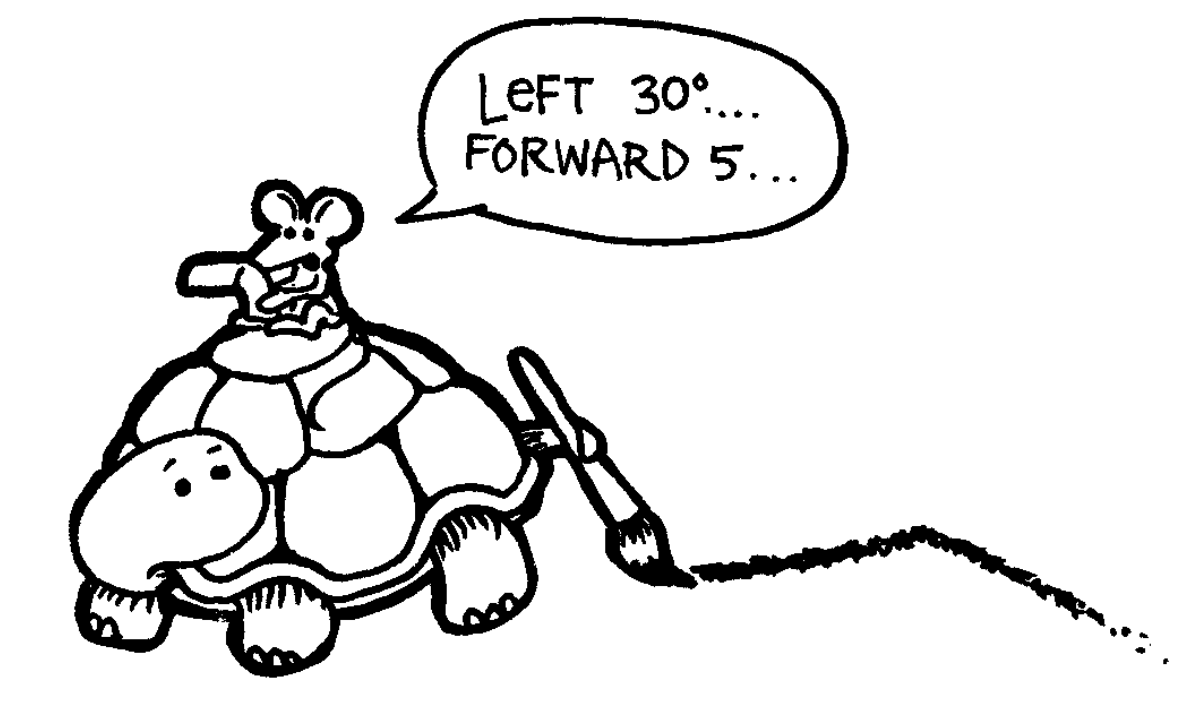
- The Robot Commander (Programming): We will learn how to be a good commander. We will use a specific "Combination of Orders" (Instruction Set) to tell the computer exactly what to do. This is what we call "Programming." We will use a language so simple that we don't even need a computer, allowing children to physically experience how to precisely control a partner's movements.
Are you ready? Let's switch our brains to "Engineer Mode" and challenge ourselves to tame this super-fast machine that needs you to teach it step-by-step!